
If you walk into a standard reach-in bedroom closet, half the space is usually wasted. You get one builder-grade wooden shelf near the top, a single sagging metal rod underneath, and a pile of shoe boxes cluttering the floor.
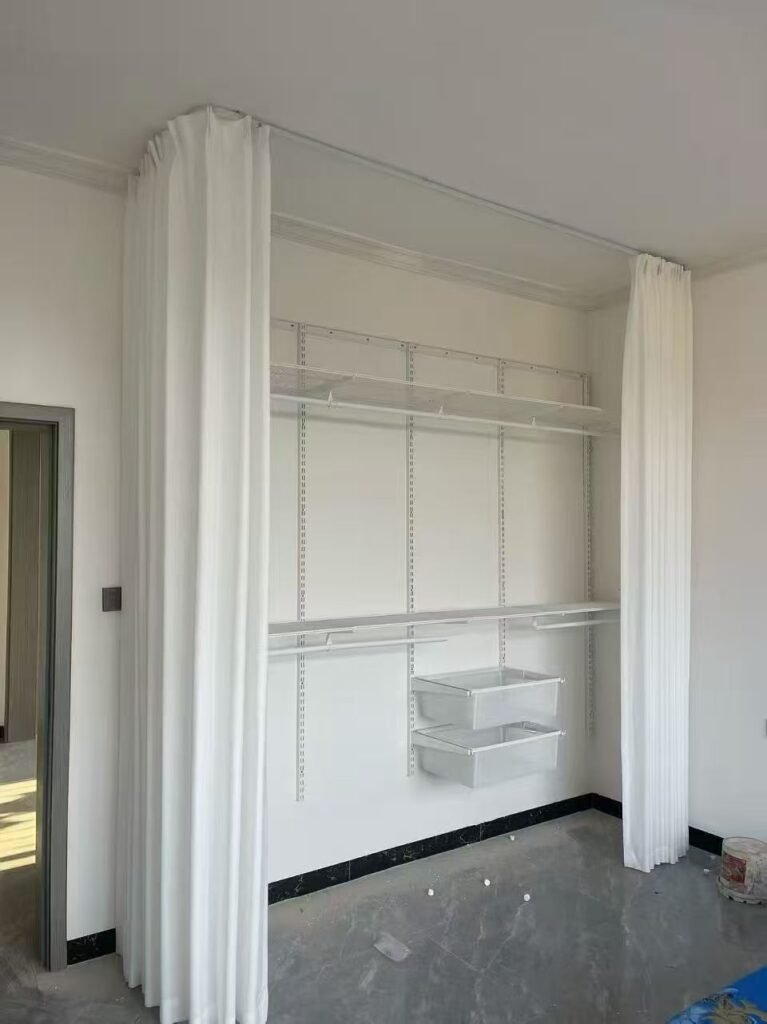
Upgrading to a wall-mounted shelf closet system is the fastest way to double or triple that usable space. However, before buying any track-and-bracket organizer, most homeowners and contractors hit the exact same roadblock: fear of wall failure. Nobody wants to wake up at 2:00 AM to the sound of twenty heavy winter jackets tearing out of hollow drywall.
Having manufactured and tested modular aluminium closet hardware for residential and multi-family projects, here is the real-world breakdown of how wall-mounted systems handle heavy loads, how to anchor them properly, and when to choose them over other layouts.
1. Why Metal Wall-Mounted Systems Beat Traditional Built-In Cabinets
Unlike bulky floor-standing wooden wardrobes that eat up valuable square footage and trap moisture, a suspended steel track-and-standard system keeps your entire floor clear while adapting to your wardrobe over time.
- Unobstructed Floor Access: Because nothing touches the ground, cleaning underneath is effortless. You also gain open floor clearance for rolling laundry hampers, luggage, or stackable shoe racks.
- True Modular Flexibility: Kids grow, and seasonal wardrobes change. With slotted vertical steel standards (uprights), you can unhook a shelf bracket and move it up or down in 1-inch increments in under ten seconds—no screwdriver required.
- Zero Sagging Under Heavy Loads: Standard particleboard shelves bow in the middle after a year of holding heavy sweaters or laundry detergent jugs. Cold-rolled steel brackets and reinforced shelving stay dead straight even under continuous heavy loads.
- Ideal for Sloped Walls and Tight Reach-Ins: Standard box cabinets rarely fit neatly into attic closets, under-stair alcoves, or narrow reach-in closets. Metal top tracks can be cut to any width and staggered around electrical outlets or baseboards.
2. The #1 Buyer Concern: Drywall Anchors vs. Wall Studs
Let’s be completely honest about physics: a wall-mounted closet system is only as strong as the fasteners holding its top rail to the wall.
Most modern homes in North America and Australia use 1/2-inch hollow gypsum drywall over wooden or metal studs spaced 16 inches (or 24 inches) apart. Here is how professional installers ensure a heavy-duty metal system holds hundreds of pounds without budging:
- The Horizontal Steel Top Hang Track Does the Heavy Lifting: In a well-engineered track system, you do not mount every vertical standard separately into hollow plaster. Instead, you bolt one heavy-gauge horizontal steel top hang track directly into the wooden wall studs. The vertical uprights simply hook onto that rail, distributing downward shear force evenly across multiple studs.
- Never Rely on Plastic Expansion Plugs Alone: Standard cheap plastic wall plugs are meant for picture frames, not wardrobes. Where a track hole misses a wooden stud, installers must use heavy-duty metal toggle bolts (like Snaptoggle anchors) rated for at least 75–100 lbs per anchor in 1/2-inch drywall.
- Cold-Rolled Steel & Bracket Locking Teeth Matter: Look closely at where the shelf bracket meets the vertical upright. Thin, single-slot tracks allow brackets to wobble side-to-side when you pull a heavy coat off the hanger. Heavy-gauge cold-rolled steel uprights with double-slotted locking teeth eliminate lateral sway and prevent bending under torque.
System Comparison & Crucial Installation Metrics
When deciding between a wall-mounted setup and a floor-to-ceiling alternative, consider your wall materials and floor clearance needs
- Metal Wall-Mounted Systems: Best for solid wood studs, concrete, or brick walls, offering 100% clear floor space and effortless installation on sloped ceilings.
- Floor-to-Ceiling Systems: Ideal for hollow drywall without accessible studs, glass walls, or open room dividers with standard 8ft to 12ft flat ceilings.
3 Critical Measurements Before Ordering
- Double-Hang Rod Heights: Position your top rod at 80 to 82 inches and your middle rod at 40 to 42 inches off the floor.
- Shelf Depth: Use 12-inch or 14-inch shelves for folded clothes to prevent items from getting lost in the back.
- Ceiling Clearance: Leave 12 to 14 inches of space above your top shelf for bulky items like winter duvets.
Frequently Asked Questions (FAQ)
- How much weight can a metal wall-mounted closet system hold? Properly anchored heavy-gauge steel systems support 100 to 150 lbs per linear foot, exceeding the capacity of plastic or lightweight wire alternatives.
- Can I install it on concrete or brick walls? Yes; masonry and concrete provide maximum pull-out strength using masonry sleeve anchors or Tapcon concrete screws.
- Solid Shelving vs. Wire Grids: Pairing heavy-duty steel brackets with solid melamine, wood, or perforated metal shelves prevents creases on folded clothes and keeps small items from falling through.
Need Heavy-Duty Metal Closet Hardware for Your Home or Project?
We manufacture precision-stamped cold-rolled steel wall-mounted tracks, double-slotted standards, brackets, and complete modular closet systems engineered for residential and commercial projects. [Request a Free Closet Layout & Factory Quote Today]